Medicines. Materials. Formulations. Catalysts. Explore how programmable chemistry can support the questions that matter to your team.
CHEMIFY / APPLICATIONSEXPLORE WHAT’S POSSIBLE
DISCOVERY ACROSS CHEMISTRY
Discover function. Expand what chemistry can do.
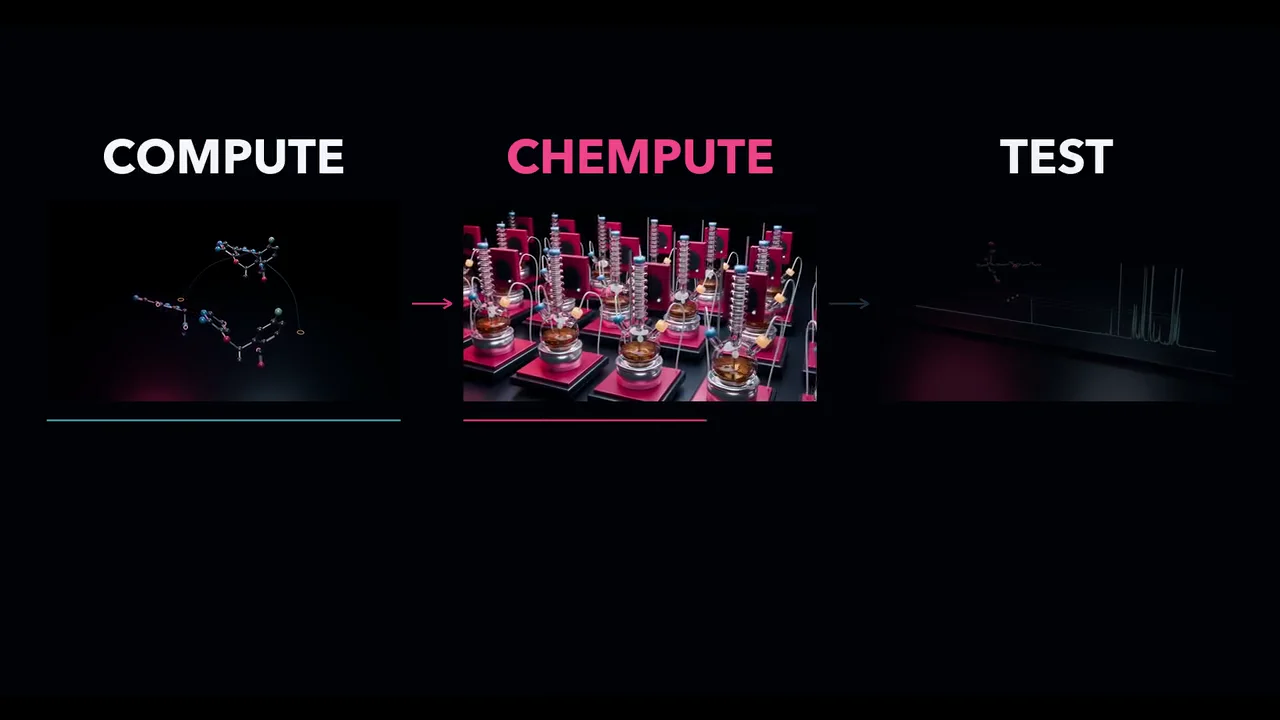
Chemify connects integrated AI, programmable synthesis and experimental learning to help partners discover molecules, materials and new possibilities.
CHEMIFY PARTNER PROGRAMMES
Progress that changes the next decision.
New hits. Stronger series. A path towards an asset.
01
From hit identification to hit-to-lead entry.
One tuberculosis target programme reached hit-to-lead entry. In a second, Chemify and Lgenia achieved a several-fold potency improvement within one chemical series, with partner-led assays informing what to pursue next.
Target modelling and retrosynthesis prioritised fewer than 100 candidates across several scaffolds. The first experimental cycle identified early hits and a direction for further discovery.
Testing, integrated: Chemify can perform testing and work with partners to integrate their testing routines. Agreed results guide the next iteration.
The science behind new possibilities.
Published research from the Cronin Lab and its collaborators shows the breadth of that foundation. Bring your challenge to Chemify to explore how these approaches can serve your programme.
01BIOLOGICAL FUNCTION & MOLECULAR RECOGNITION
Start with the function. Find the chemistry.
From biological activity to molecular recognition, connect what a molecule does with what to make next.
PUBLISHED CRONIN LAB RESEARCH
Discover and refine biological activity.
Programmable synthesis and biological feedback identified kinase-inhibitor hits and guided compounds with improved activity in a preclinical colorectal-cancer model.
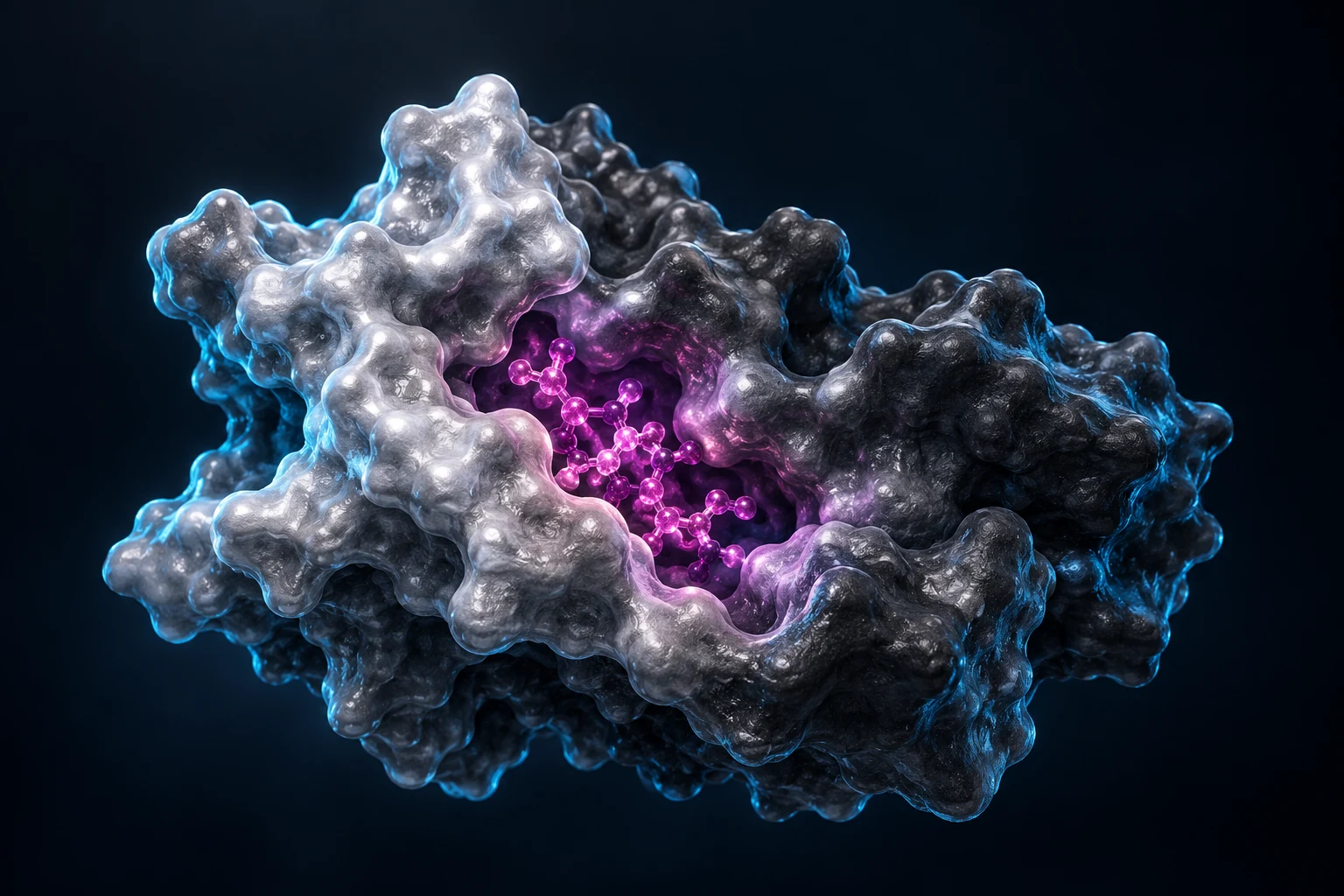
AI used molecular shape and electrostatics to propose guests for molecular hosts. Experiments confirmed eleven previously unreported binding relationships across two host systems.
Search beyond the molecule. Explore how composition, crystal form and structure create useful properties.
PUBLISHED CRONIN LAB RESEARCH
Discover frameworks with function.
Machine learning and robotic synthesis discovered nine new polyoxometalate-based metal–organic frameworks, connecting their composition and structure with electron-transfer behaviour.
Robotics, computer vision and active learning mapped crystallisation conditions, located a rare form of the benchmark compound ROY, and refined the conditions needed to produce it.
Make the route programmable—from stereochemistry and electrochemistry to feedback-driven optimisation.
PUBLISHED CRONIN LAB RESEARCH
Build stereochemistry into the programme.
Reusable χDL blueprints enabled parallel workflows for three chiral catalysts and twelve enantioenriched products, with enantiomeric ratios reaching >99:1 and automated catalyst reuse.
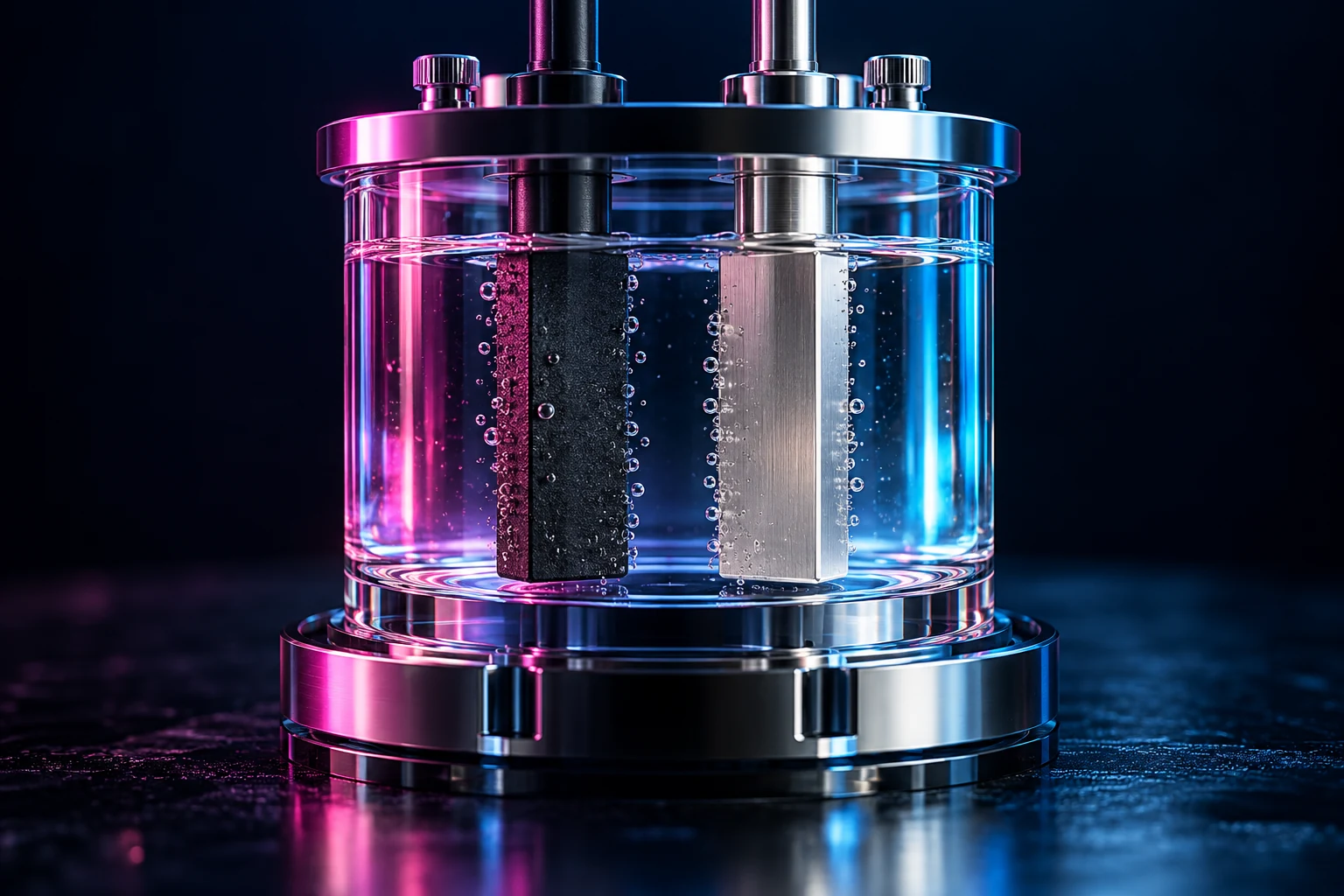
Digital electrochemical workflows brought synthesis together with NMR and electroanalytical monitoring—enabling parallel reactions and direct insight into how the chemistry progresses.
Feedback-driven experiments improved reaction yield and purity and discovered previously unreported reactions. Digital procedures connect each measurement to the next experiment.
Programmable inert-atmosphere workflows enabled synthesis, isolation and analysis of highly sensitive compounds, extending automation to chemistry requiring careful control of air, moisture and temperature.